300 WHP 1992 Turbo Miata
This article was written in 2008 and was originally intended for publication in a print magazine. The piece came very close to being published, but the magazine ultimately shut down during the economic downturn that year.
Rather than letting the work disappear, I’m publishing the article here as it was originally written. It captures the car at a specific moment in time and reflects the state of the project in 2008 — a snapshot of the build and the people involved during that era.
FASTidious
Stan and his Hyper-refined Miata
Fact number one: This should have been my car.
I almost bought this car six years ago, but another friend got it instead. A year later, he sold it to Stan, which is how I met Stan. At that time, he was doing audio visual work. He produced commercials, including one for a speed shop, where Stan now works. Incidentally, that is also where I first met Walker Morgan, who now owns Morgan Performance Fabrication. Much of the work that Stan has done is the product of skills that he learned working with Walker. It is also due to a friendly rivalry between Stan and Walker, a game of one-upmanship where each challenges the other with constant improvements to their preferred steeds. An example of this is that in the 2 weeks between when I first drove the car and we had a sit-down interview, Stan had fitted a new E85 fueling system to the car, partially because Walker had just installed the same on his EVO. But to call this a "work-in-progress" is not fair; I have seen works-in-progress and this is a level beyond that.
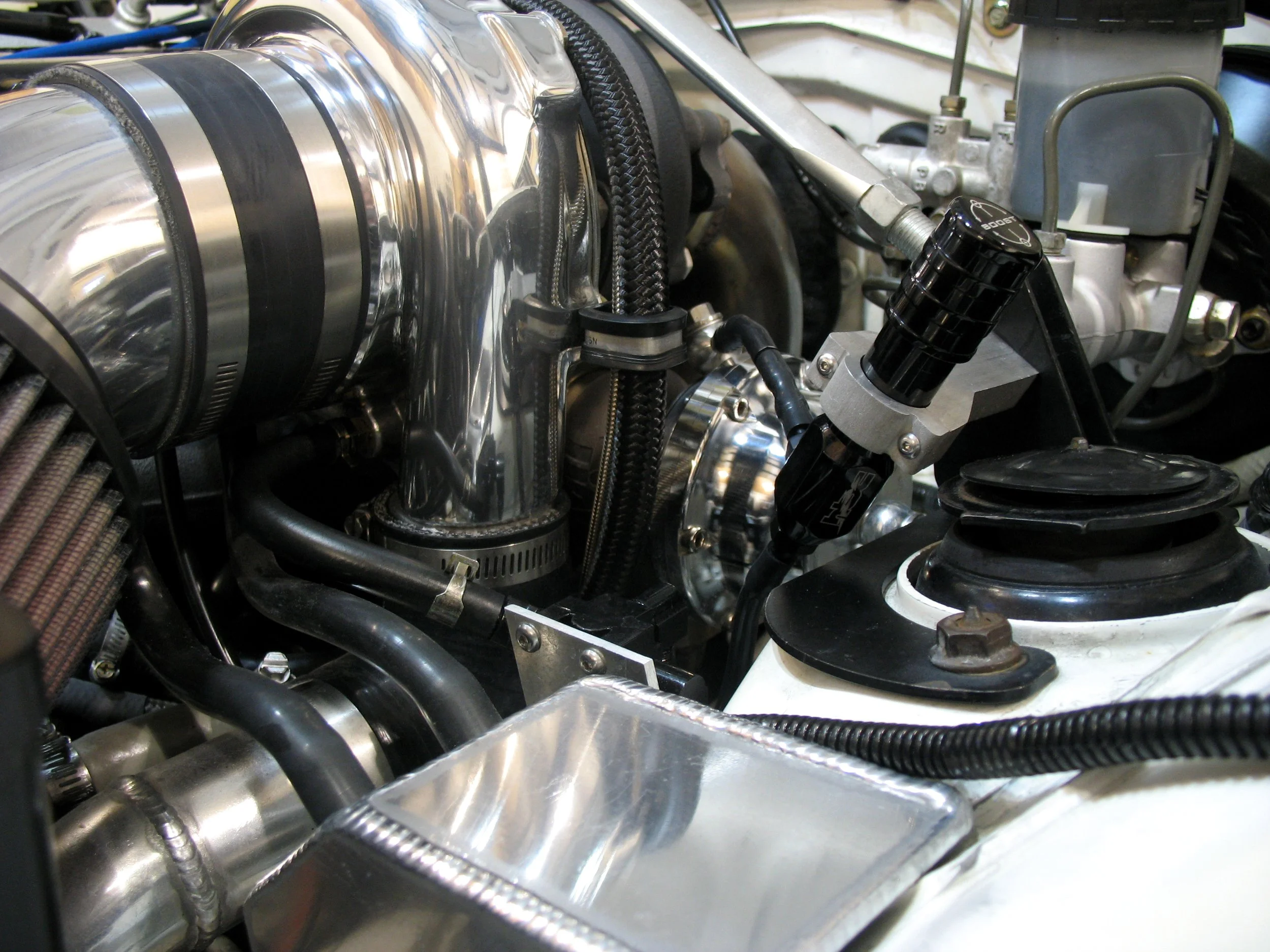
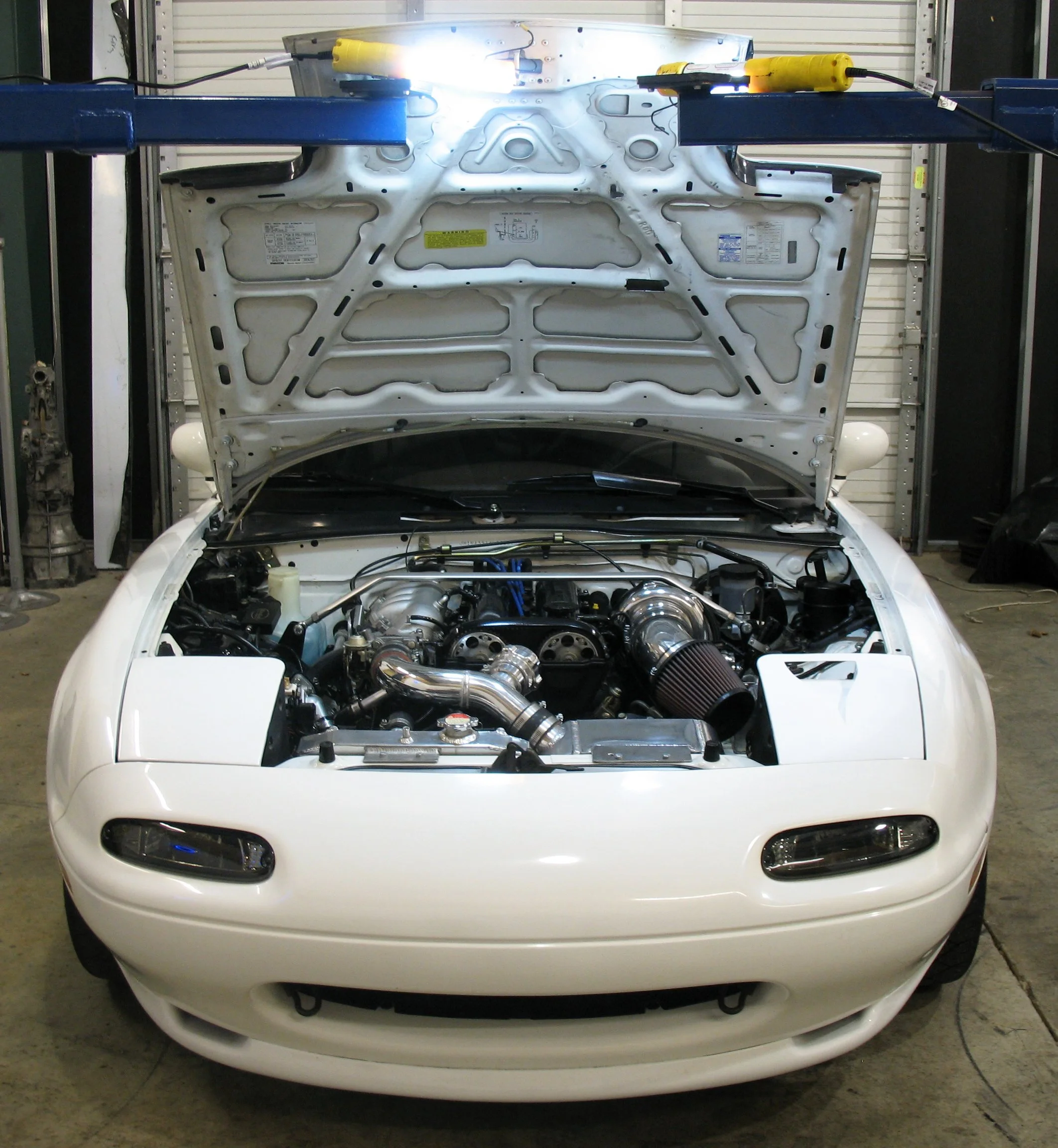
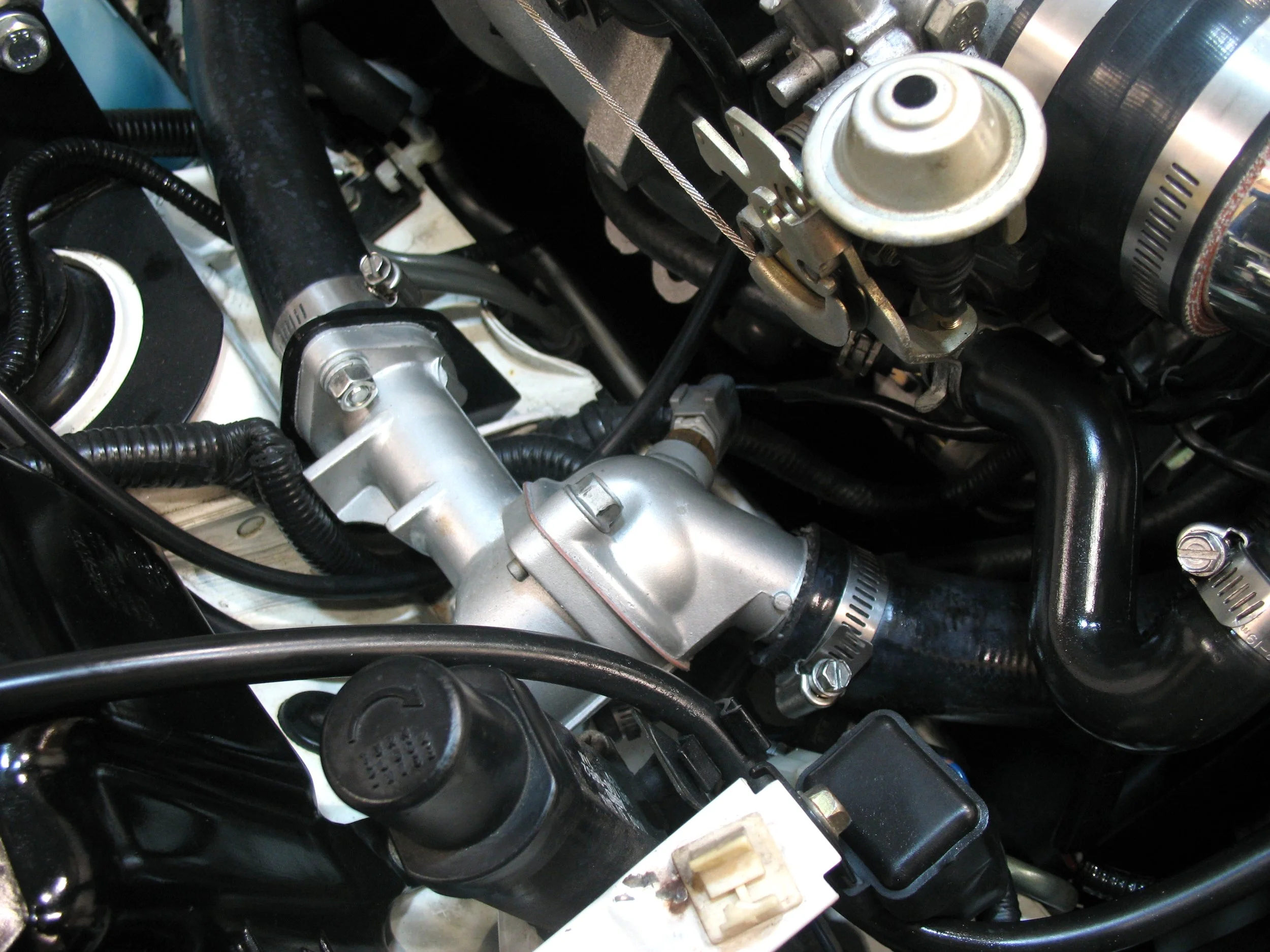
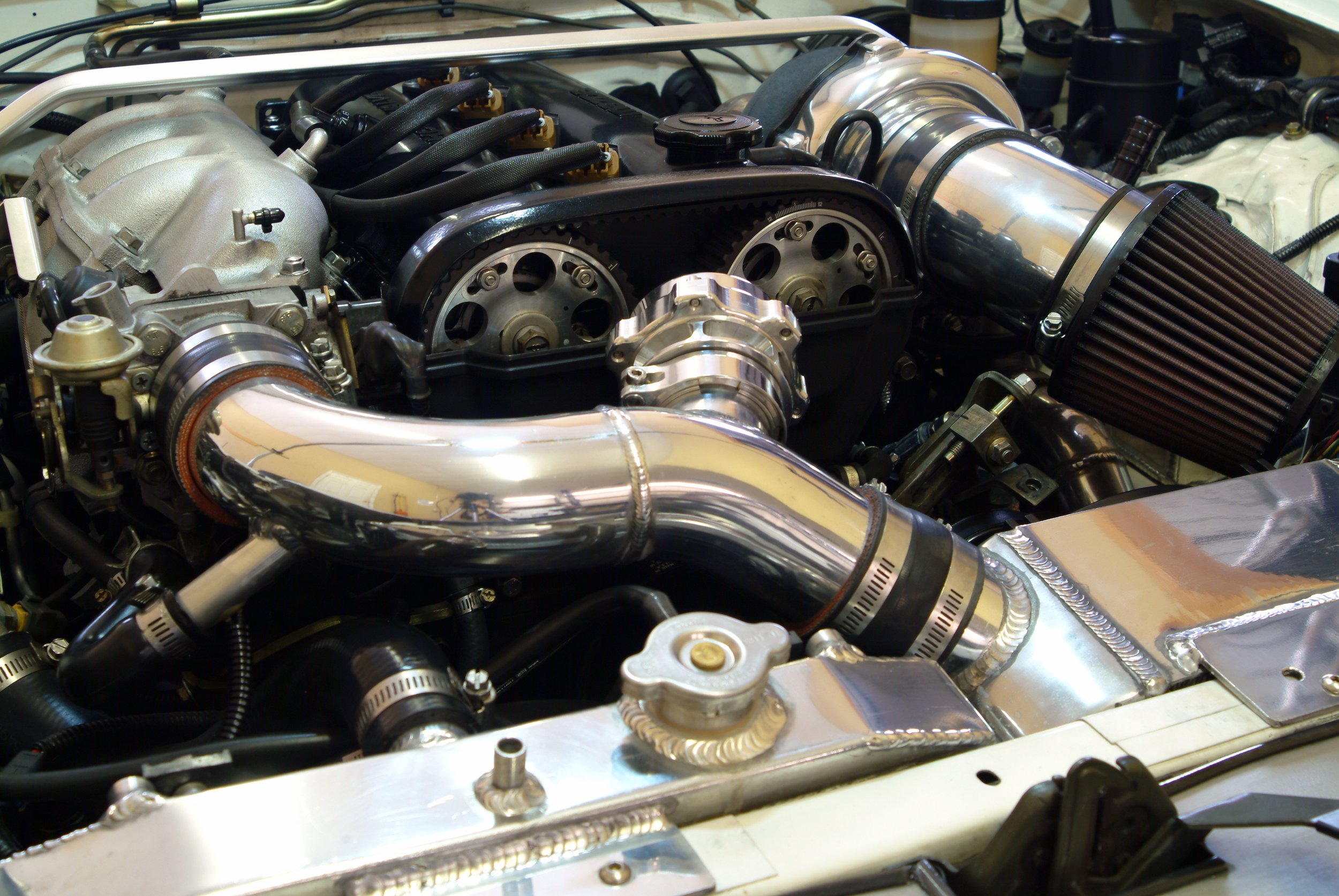
In all of the improvements that Stan has made, one common trait that shines through is his obsession to not merely produce the function that he desired in a Miata, but to build a mechanical work of art in the process. I asked Walker about Stan's work ethic on customer cars as well as his own. "Stan is capital O-C-D" Walker continues to be impressed with the attention that Stan gives to all aspects of his work. Not merely satisfied to give the customer or himself a working product, Stan makes sure that the finished product is pleasing to the eye and then goes a step beyond even that to give it an execution that implies design, not merely happenstance. Walker pointed out that the blowoff valve is installed in such a way that the centerline of the valve points toward the center of the oil fill cap. When you consider all of the ways that this Miata is appealing, there are unexpected qualities of symmetry and asymmetry that give the overall sense of rhythm and composition to the engine bay. Factory designers could take note of this emphasis.
But pretty arrangements are not more useful in a car than in a flowerpot if they do not yield the ultimate end of a powerful car. What has been achieved is unquestionably one of the strongest and most useful Miatas around. The basic specs of the car are a tuner's dream: Switchable output on a turbocharged 1.8 liter engine, mated to a 6 speed transmission, pulled back to earth by the braking system from a Mazdaspeed Miata. All of this achieved without losing the easy tractability of a standard Miata and yielding one of the best rides I have experienced in one of these cars.
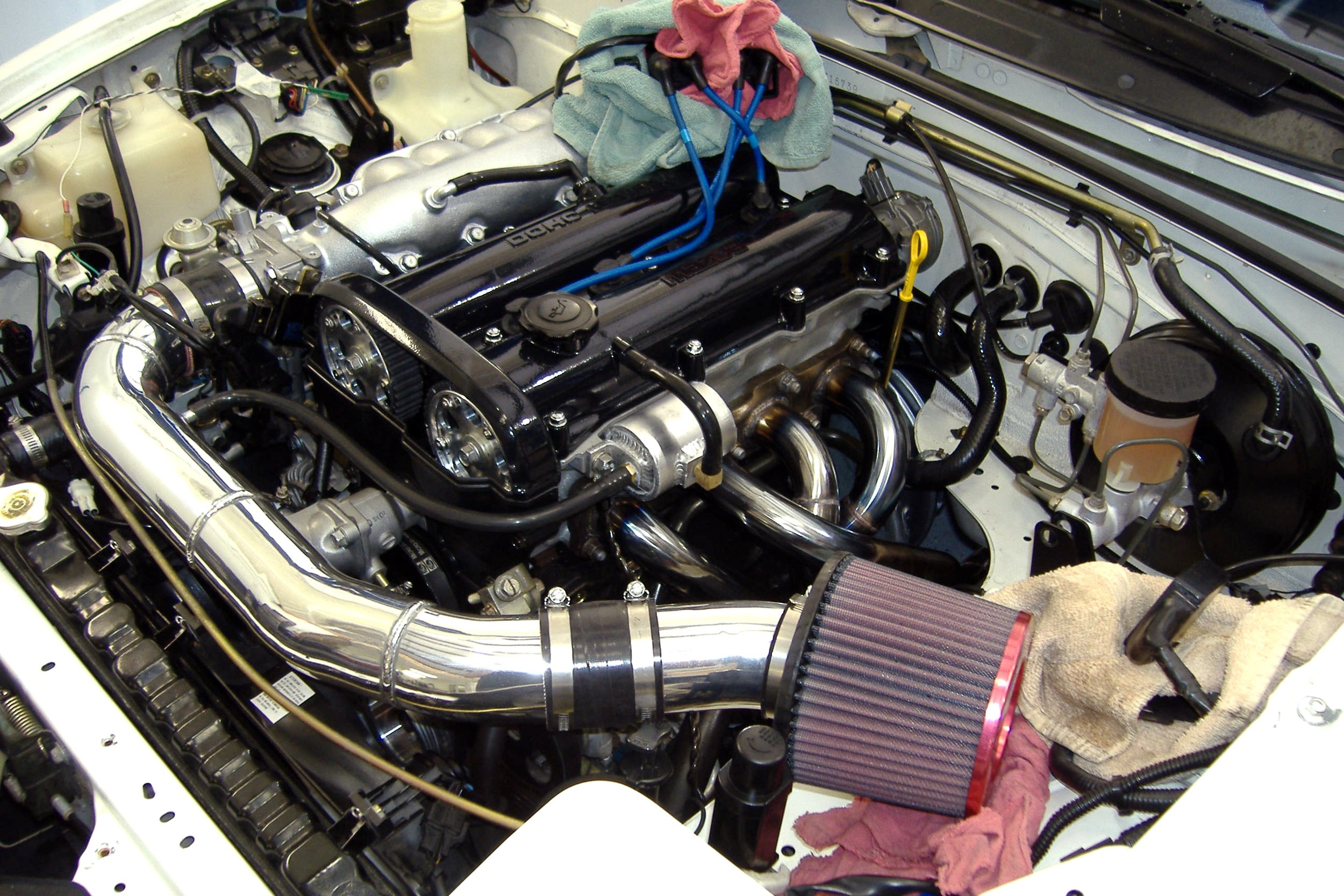
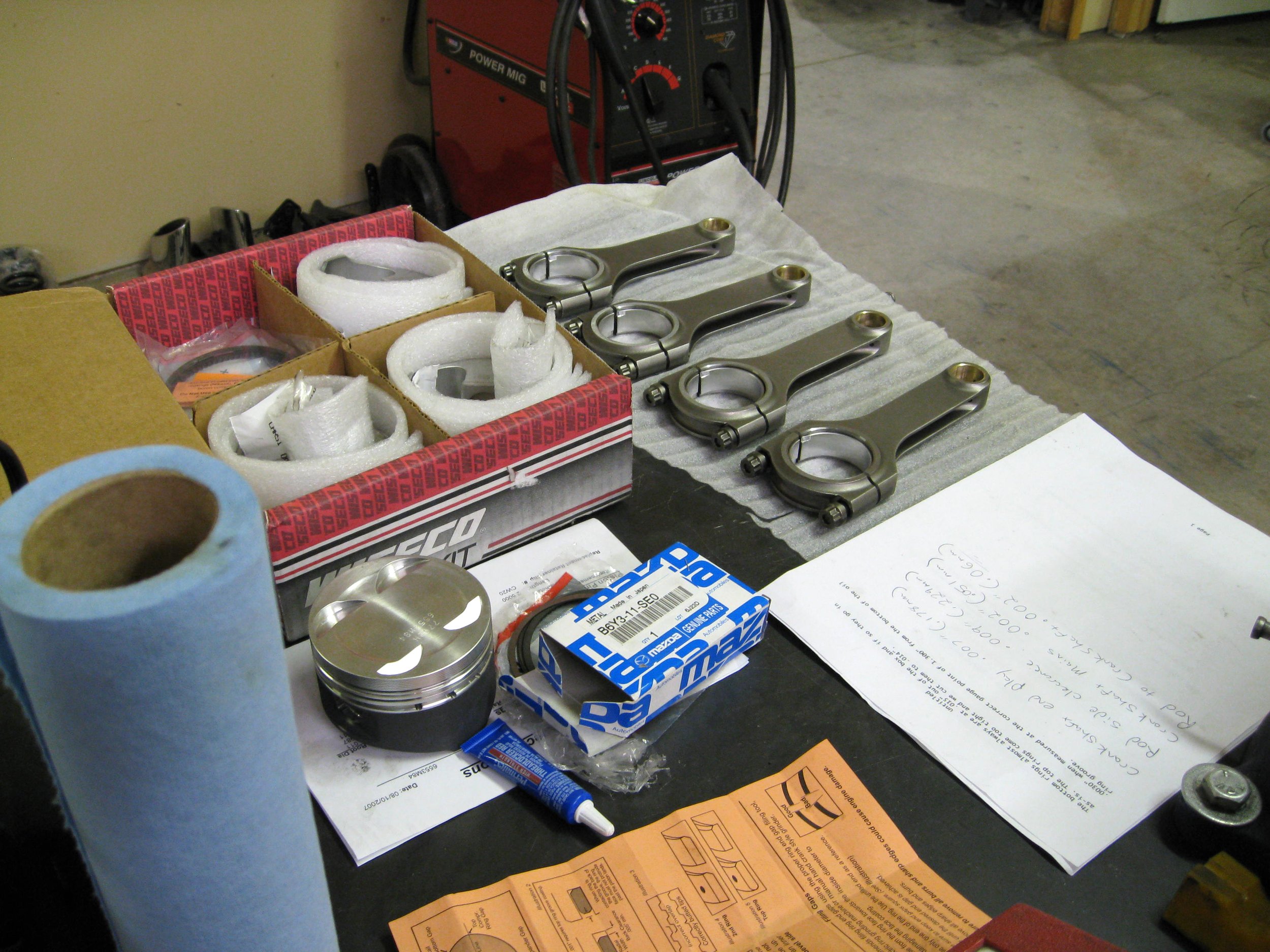
The car started life with Stan with the standard 1.6L engine. Because he has another fire-breathing turbo Miata already (!), he decided that this would be a mildly breathed-upon car for daily use. A comfortable Miata by comparison. The cars 1st engine build included a 94 1.8L bottom end and a 99 head. This setup made 136 WHP. He drove the car for over a year before a mild non-intercooled turbo setup was installed. After some time the factory oil pump gave up. It was time for a forged internal motor. The engine was intended to be strong enough to handle as much as 500 hp so that he could safely produce 300 hp without danger to the motor. To maximize throttle response, he shortened the intake length. The theory is that this shorter length minimizes the time for the air to move from the turbo to the pistons.
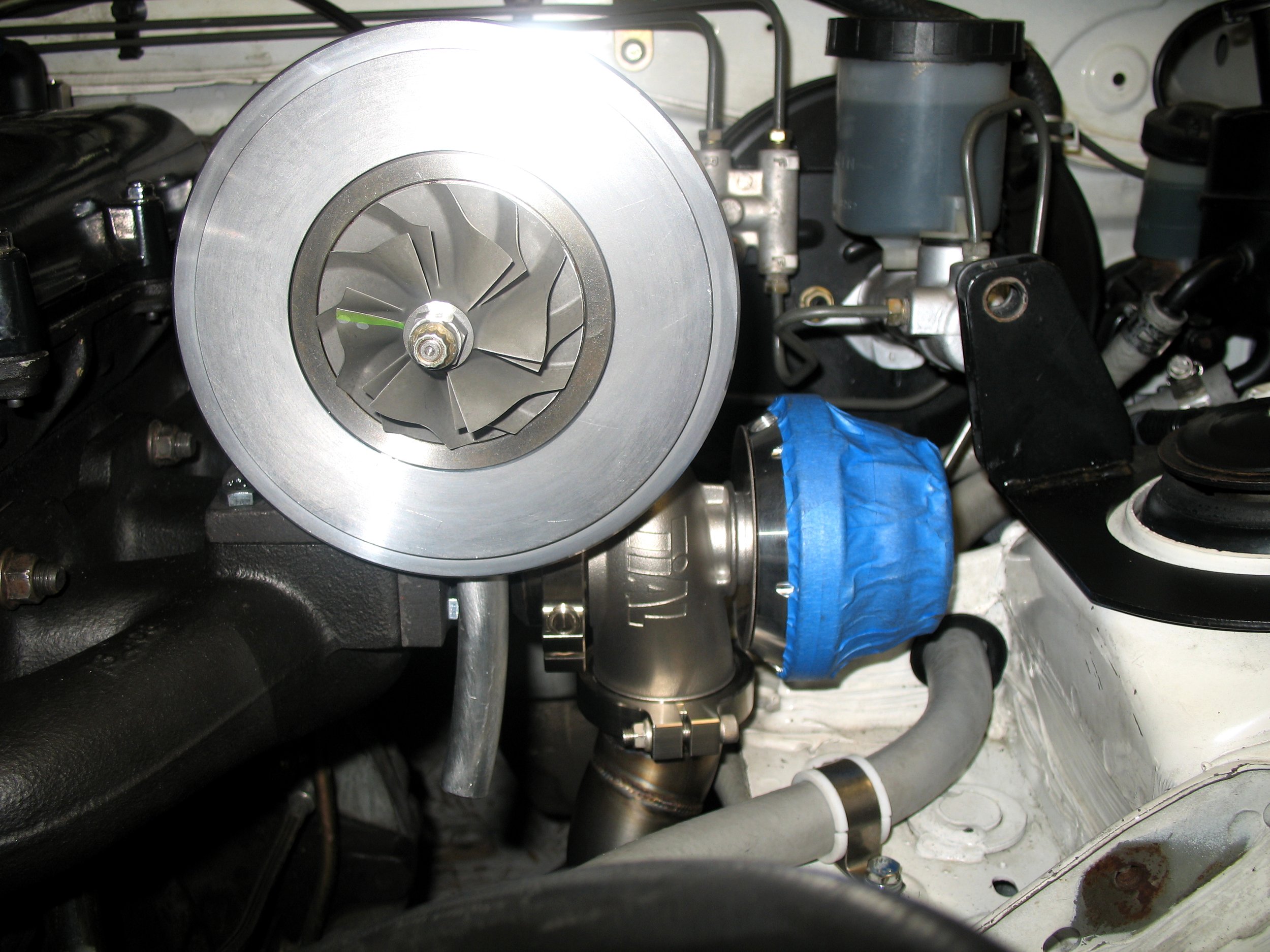
The turbo system that Stan has constructed is one of the most creative designs around. Not content to have either a solid 230 hp system that would be easy to drive or a demonic 300hp system that would be unhappy in traffic, Stan has a novel solution that allows him to have his cake and eat it too. The system is built around a Garrett GT2871R Turbocharger, with an oversized 4" compressor housing. The car has 2 separate wastegates. The internal wastegate is set to 10 psi and is used for quiet daily driving. This is the configuration that delivers 230hp to the ground. A solenoid allows switching to the larger external wastegate set to 18psi, thus allowing 300 hp to assault the tarmac. Such a complicated system appears to be simple from the drivers seat when a mere flip of a switch toggles from one system to the other.
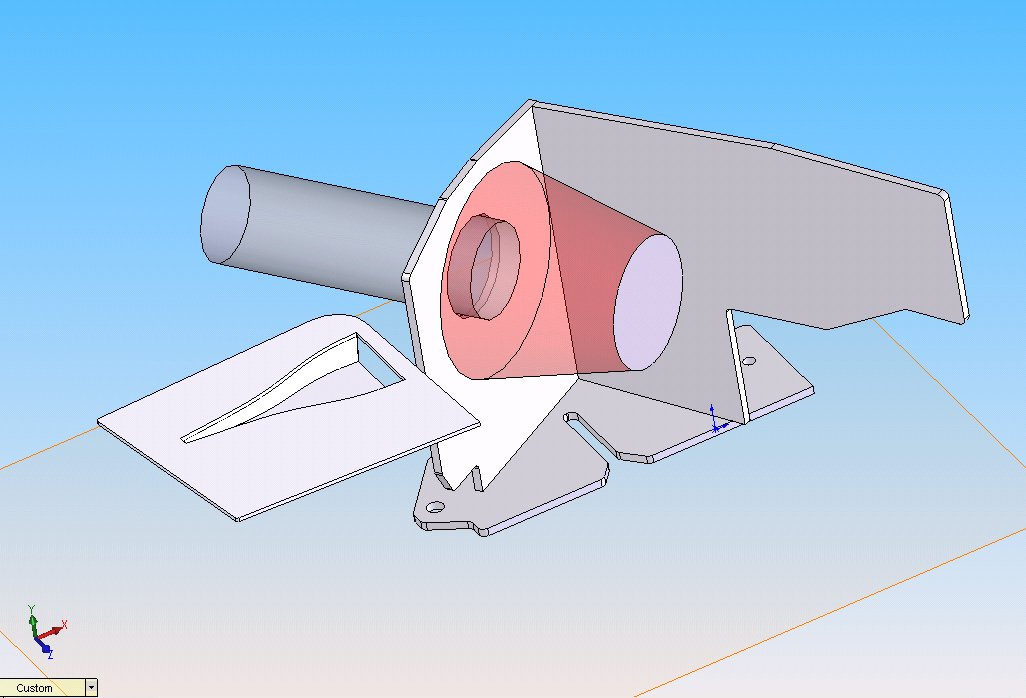
Due to ignition problems experienced with the boosted setup, Stan once again began to search for a better solution than the standard coil and plug wire setup on the stock engine. He began testing a coil-on-plug setup and has used the units from a 2006 Toyota Corolla which has eliminated those issues. Never content to merely drop the units in place, he has fabricated a fantastic looking laser-cut bracket made of aluminum.
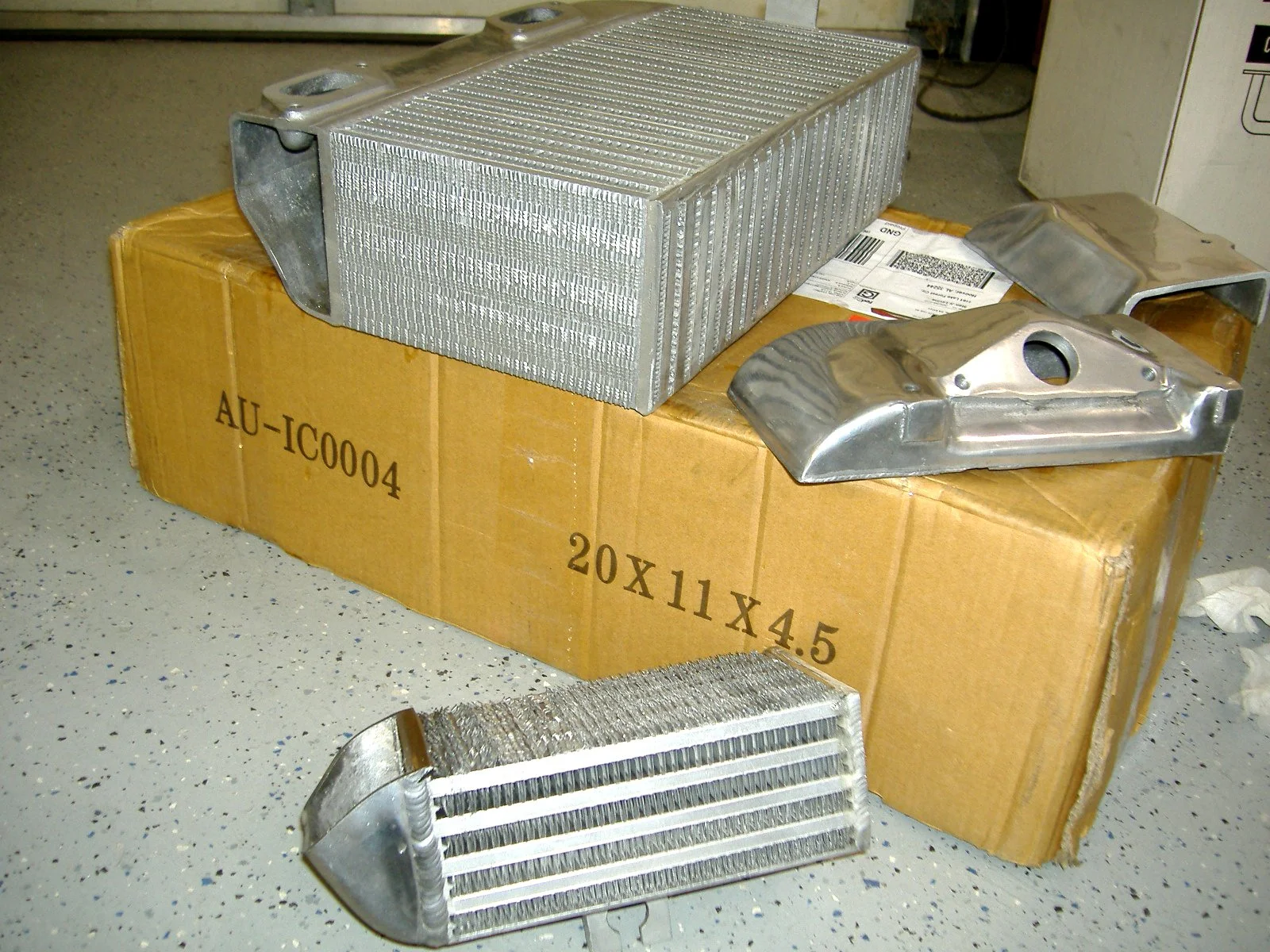
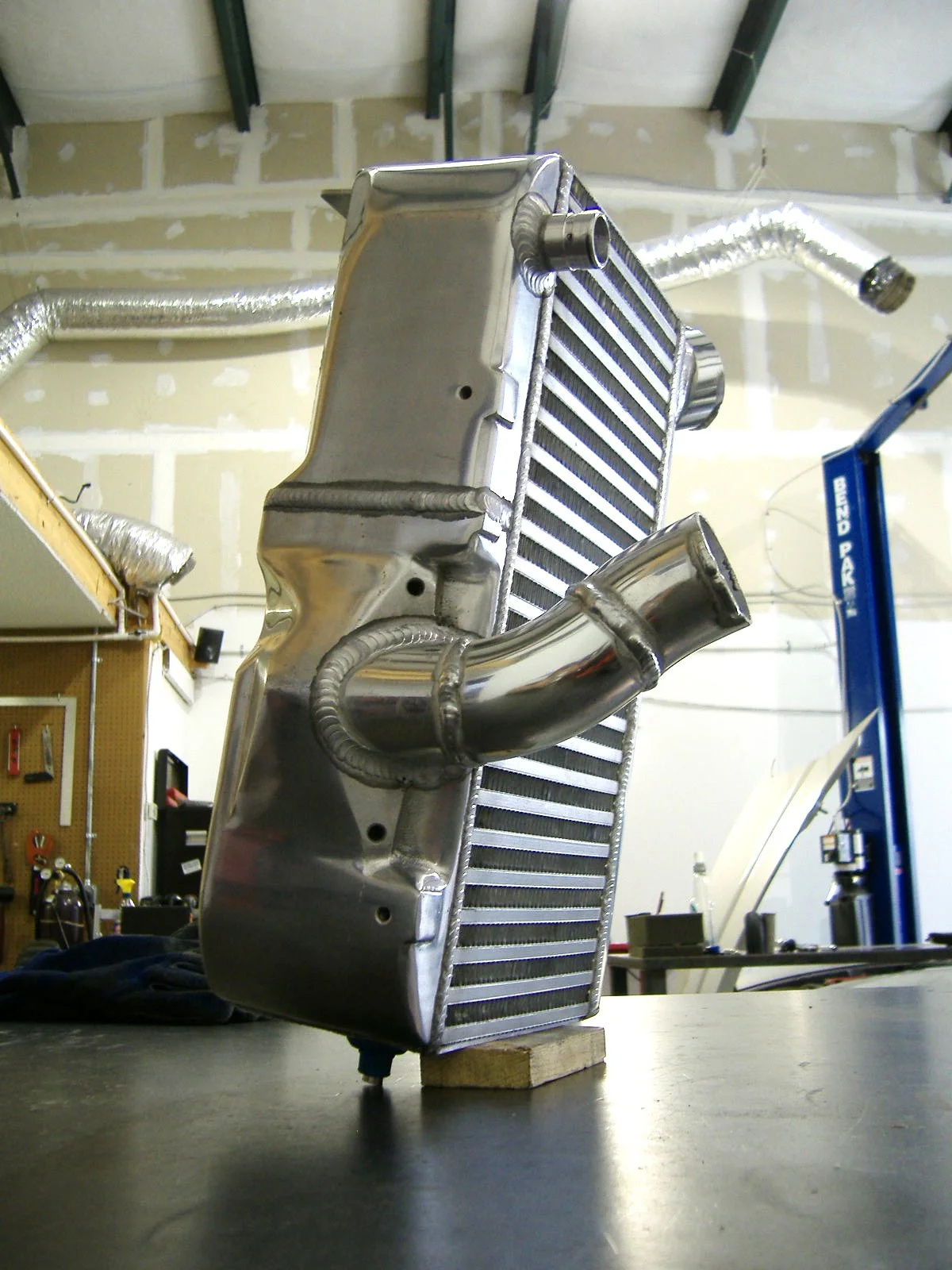
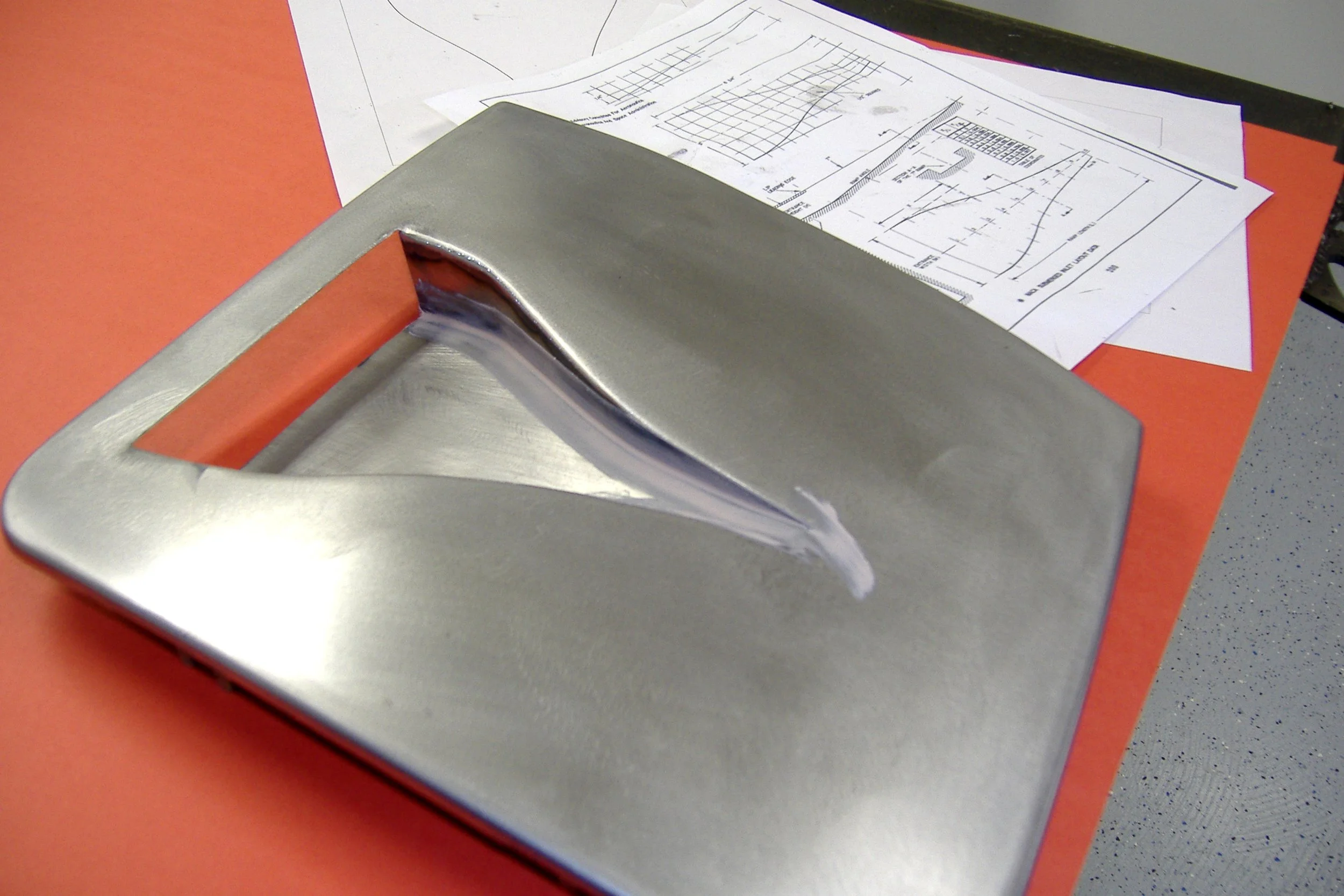
As with many higher horsepower arrangements, heat is an major problem. Stan solved this by using a smaller radiator designed for a Honda Civic, placed next to a WRX STI intercooler, rotated 90 degrees. From the front of the car, it is not apparent that this is a turbo car, as would be the case if the intercooler were placed forward of the radiator. While putting a smaller radiator would not be the apparent solution to heating problems, it works because there is nothing in front of it to disrupt the flow of air through it. Better airflow makes up for the difference in size.
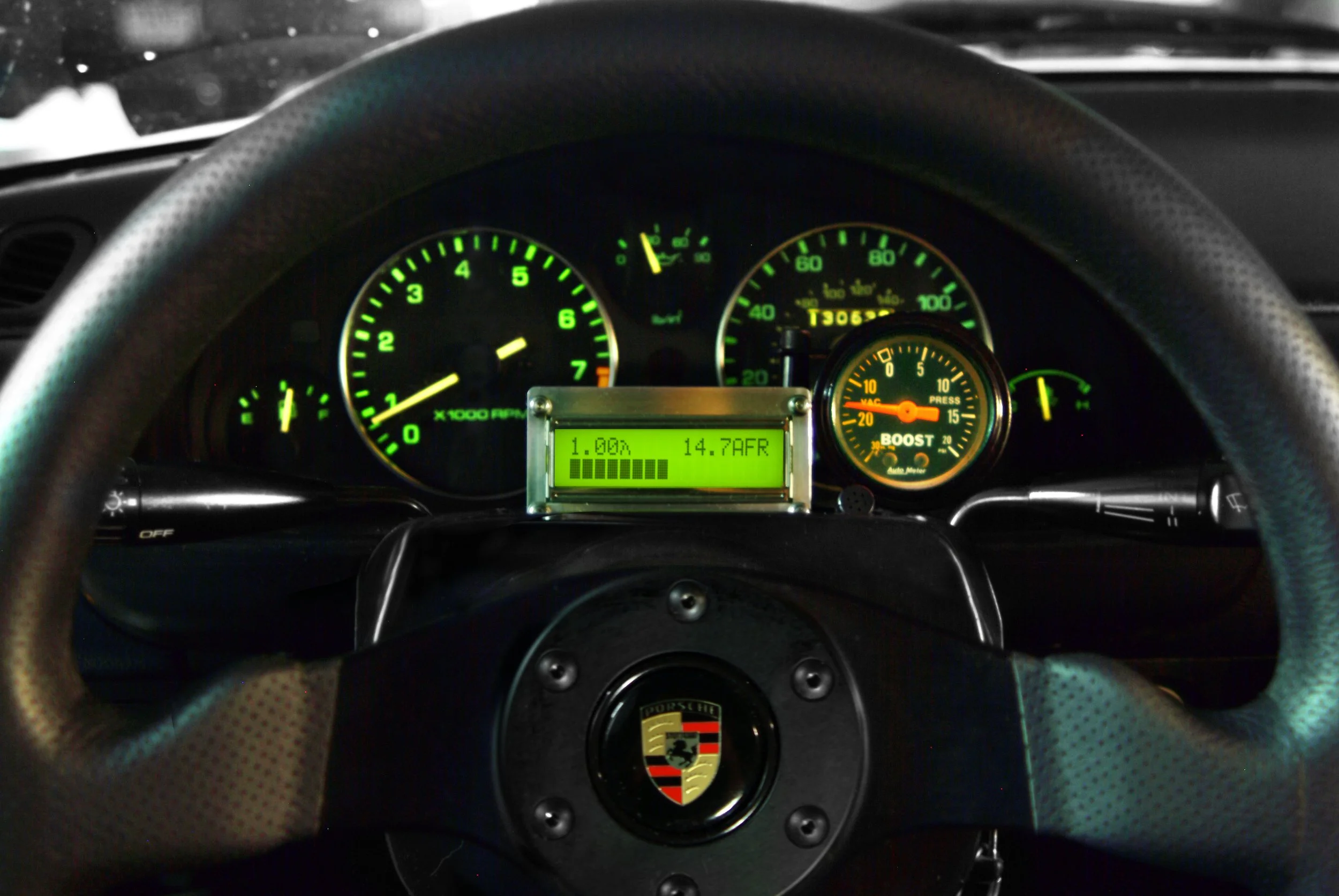
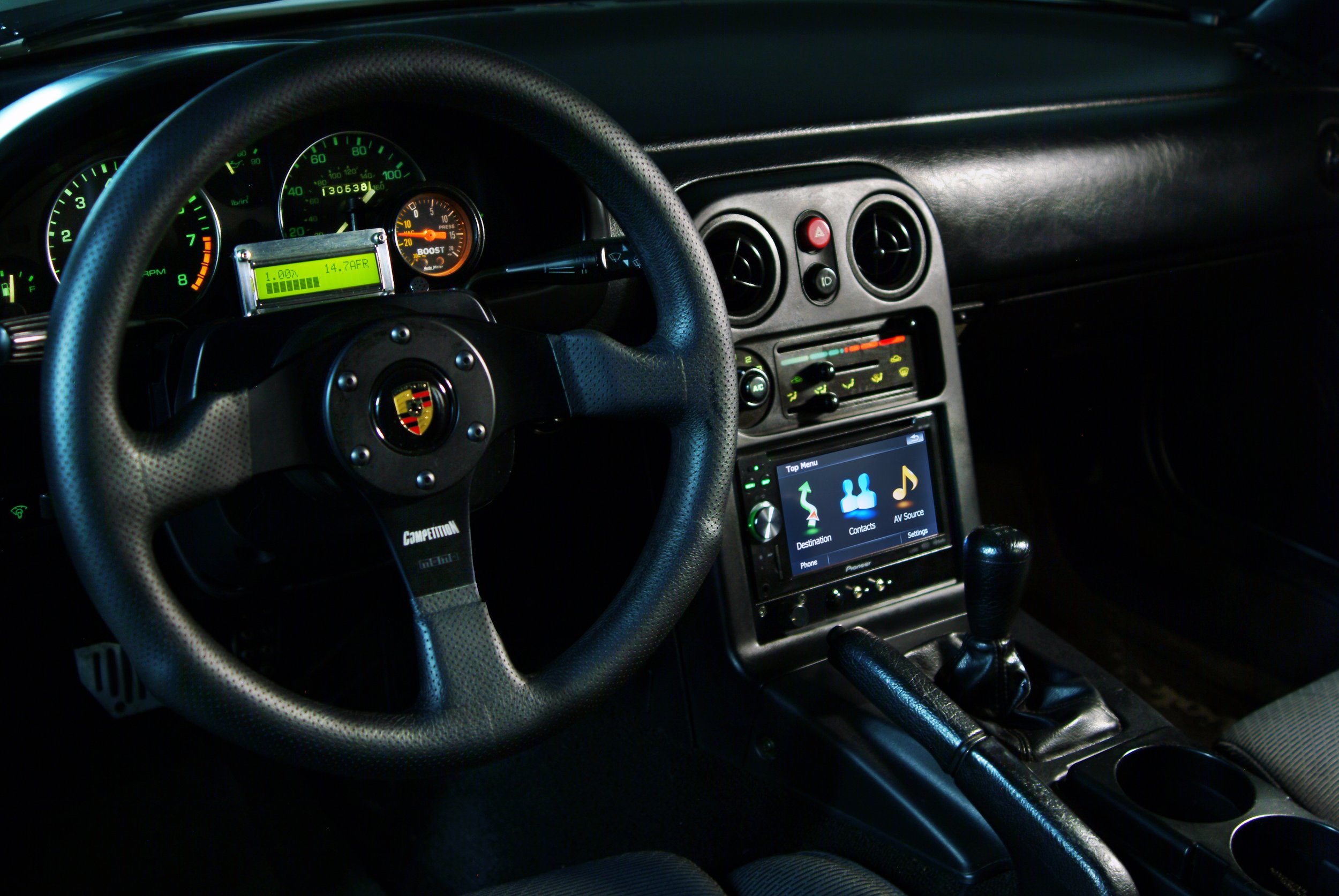
Stan has kept the interior as original as possible. There is a display for the wideband O2 sensor, which Stan has integrated into the on board Innovate LM-1. It is installed in a steering column mounted device which he designed and fabricated. Stan is not a fan of pillar-mounted gauges, so he wanted everything to be within the standard gauge area. The rest of the dash is standard, as are the cloth seats. "The stock seats are very comfortable, despite being slightly faded, so I kept those." He does have aftermarket speakers installed in the rear deck behind the seats. And the stereo is more than adequate to entertain whilst driving. With all of the wonderfulness under the hood, the sound system is a bit superfluous. It must be noted that the installation is on par with all of the other work Stan has put into the car.
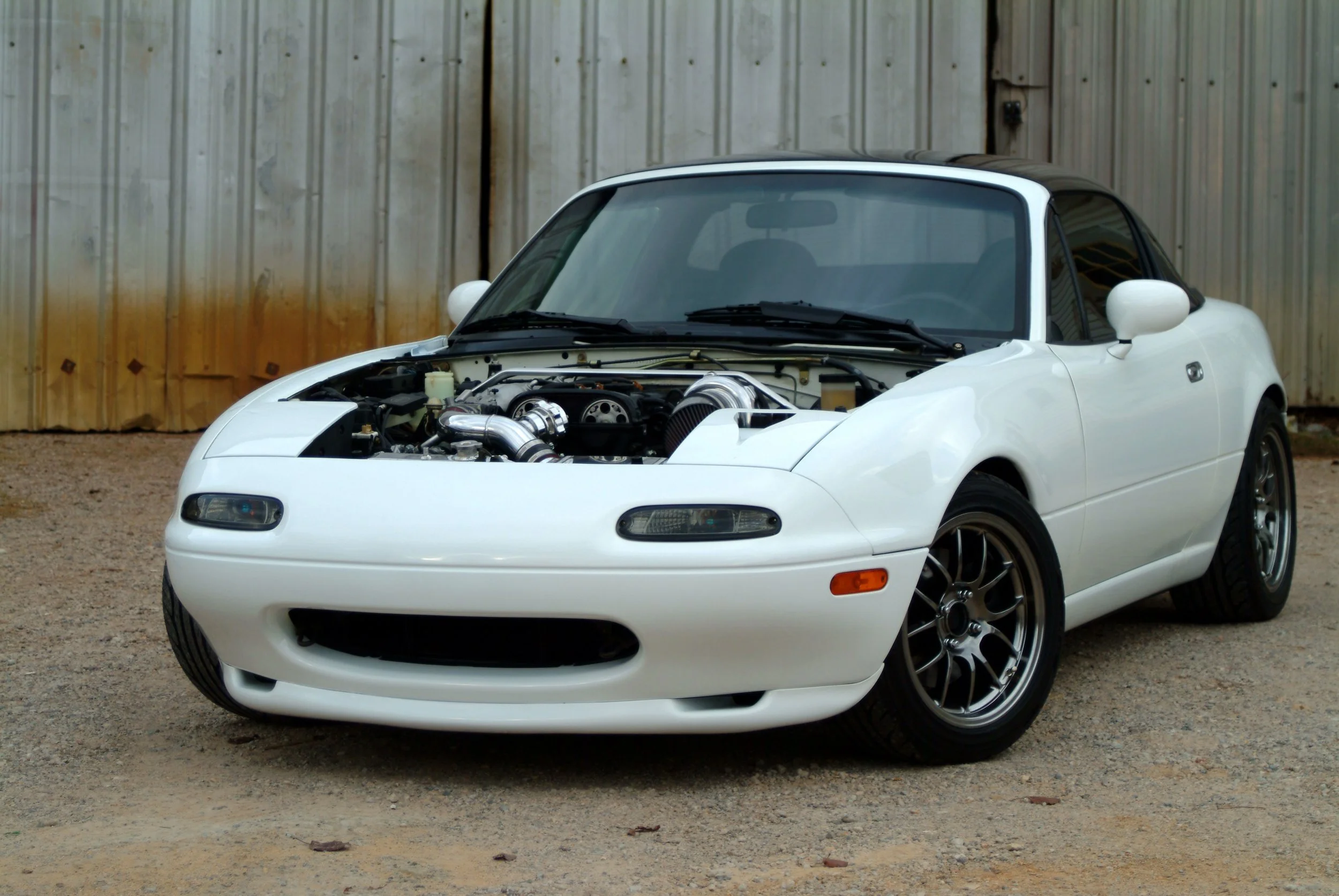
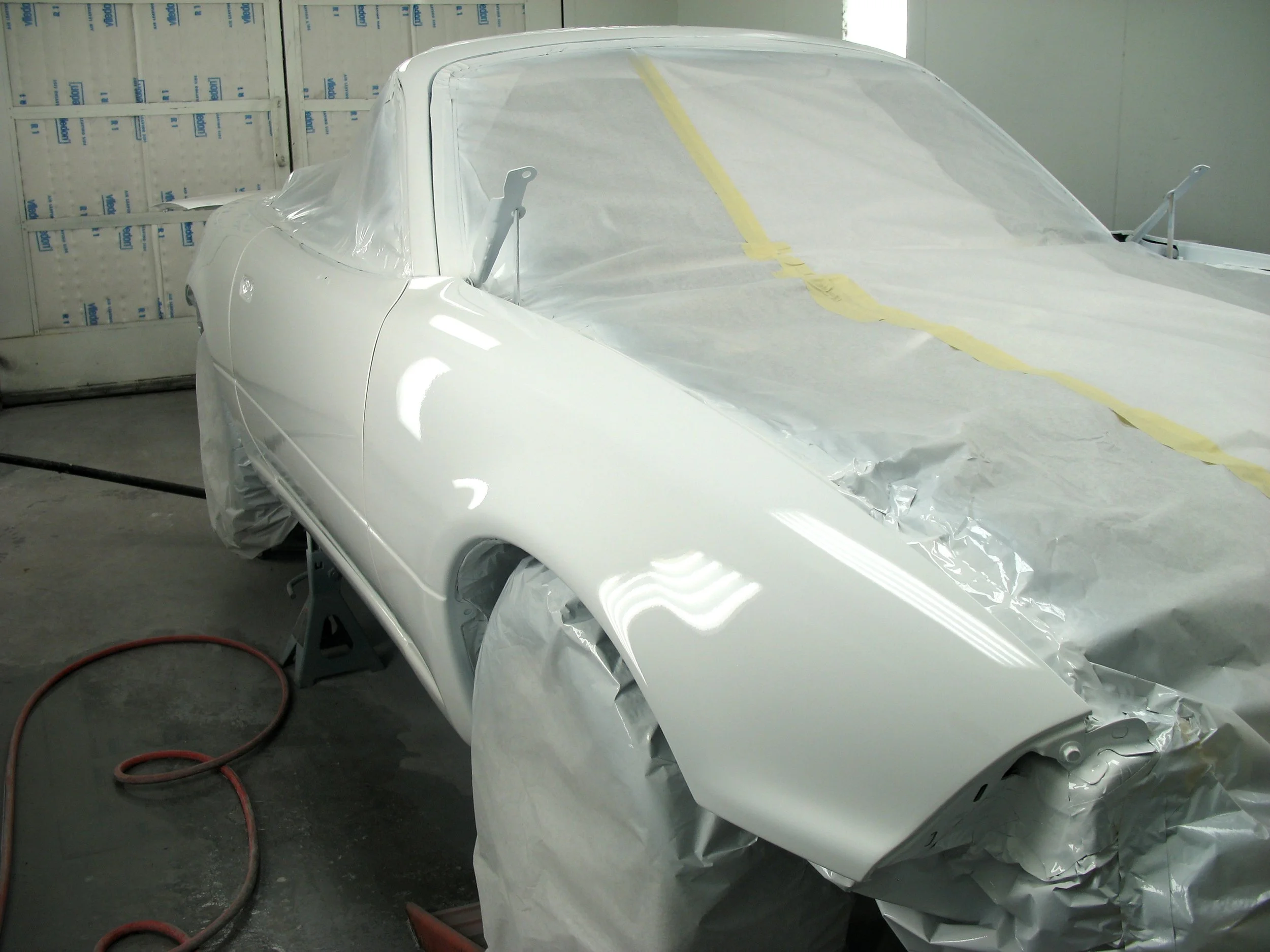
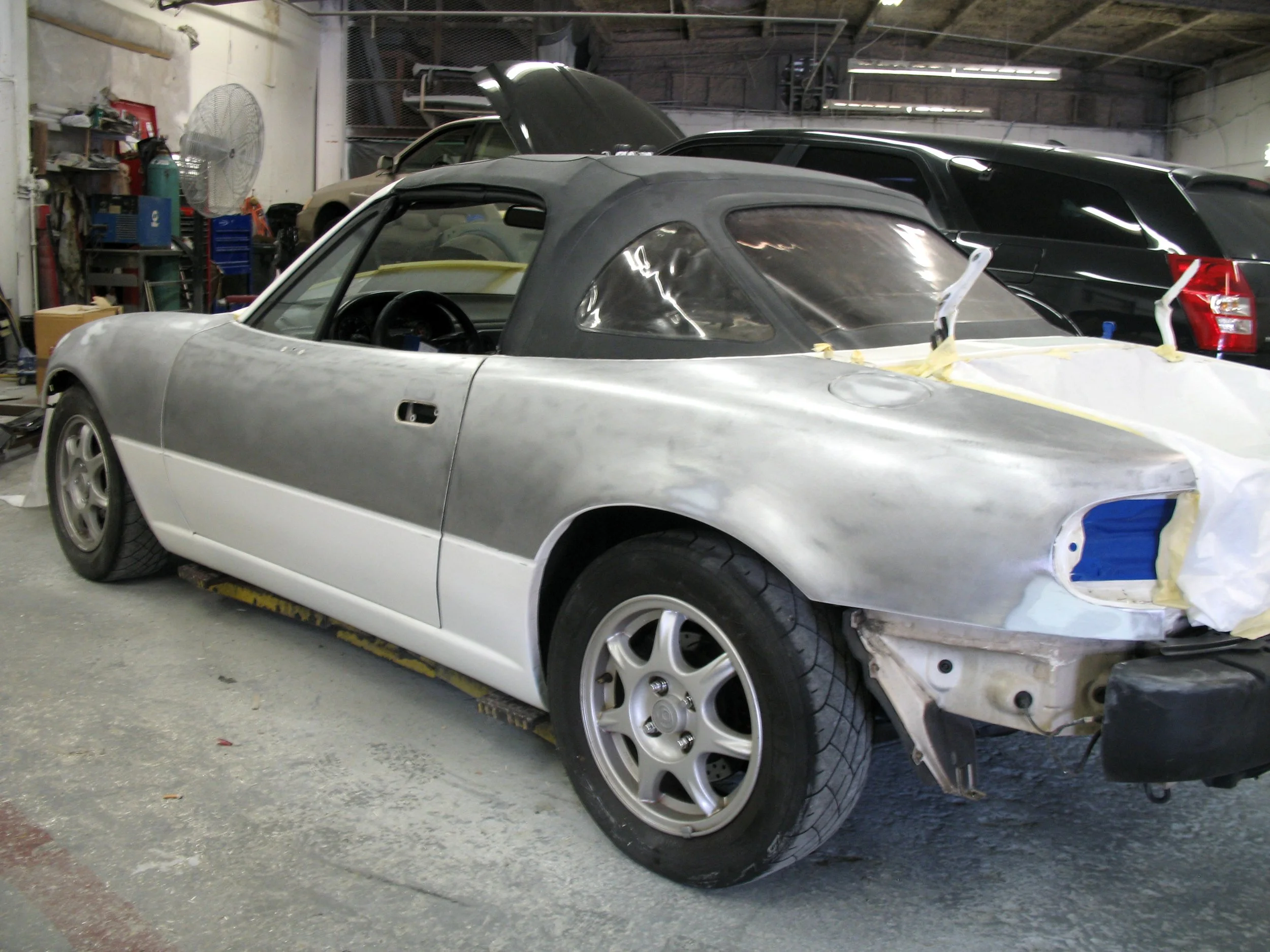
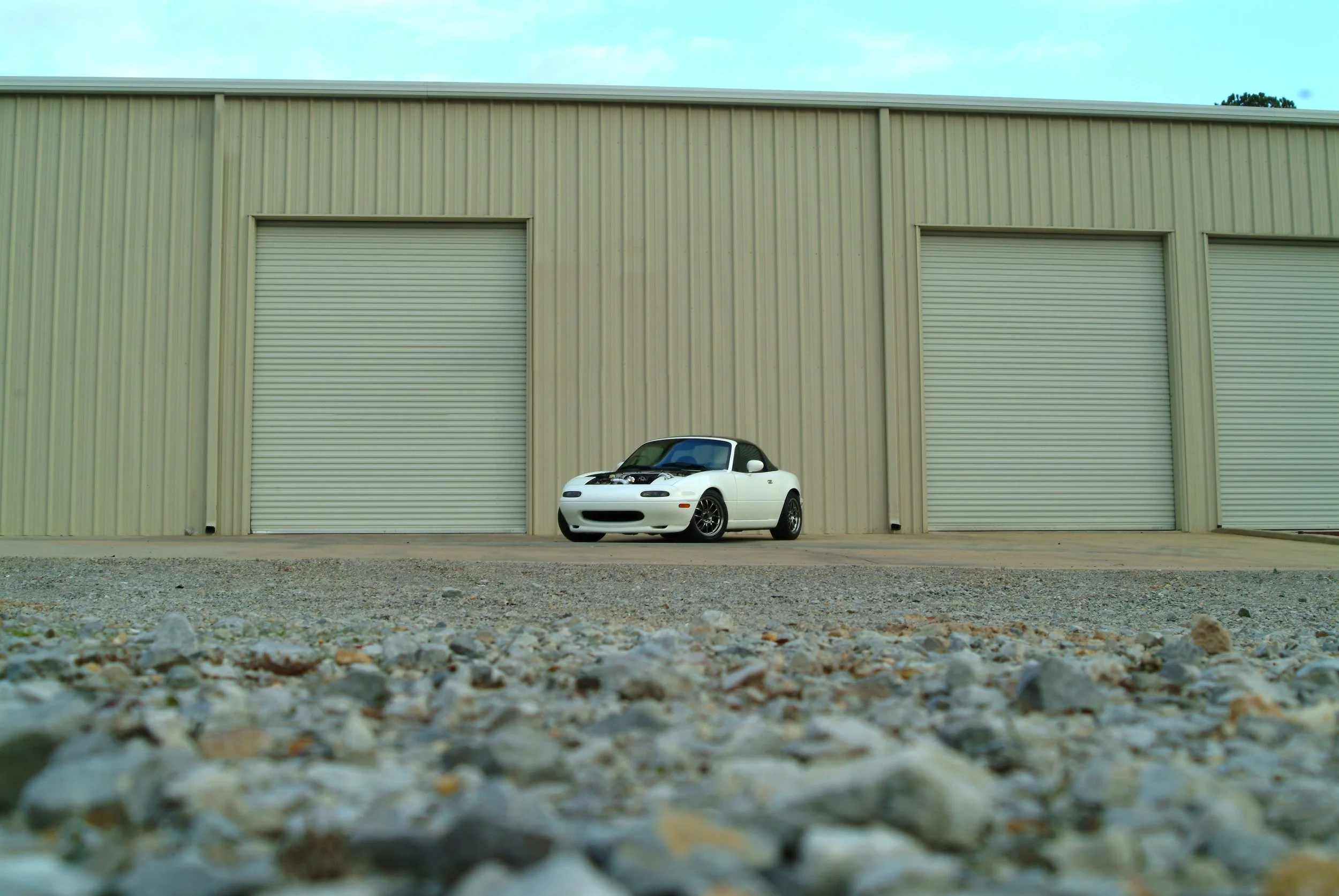
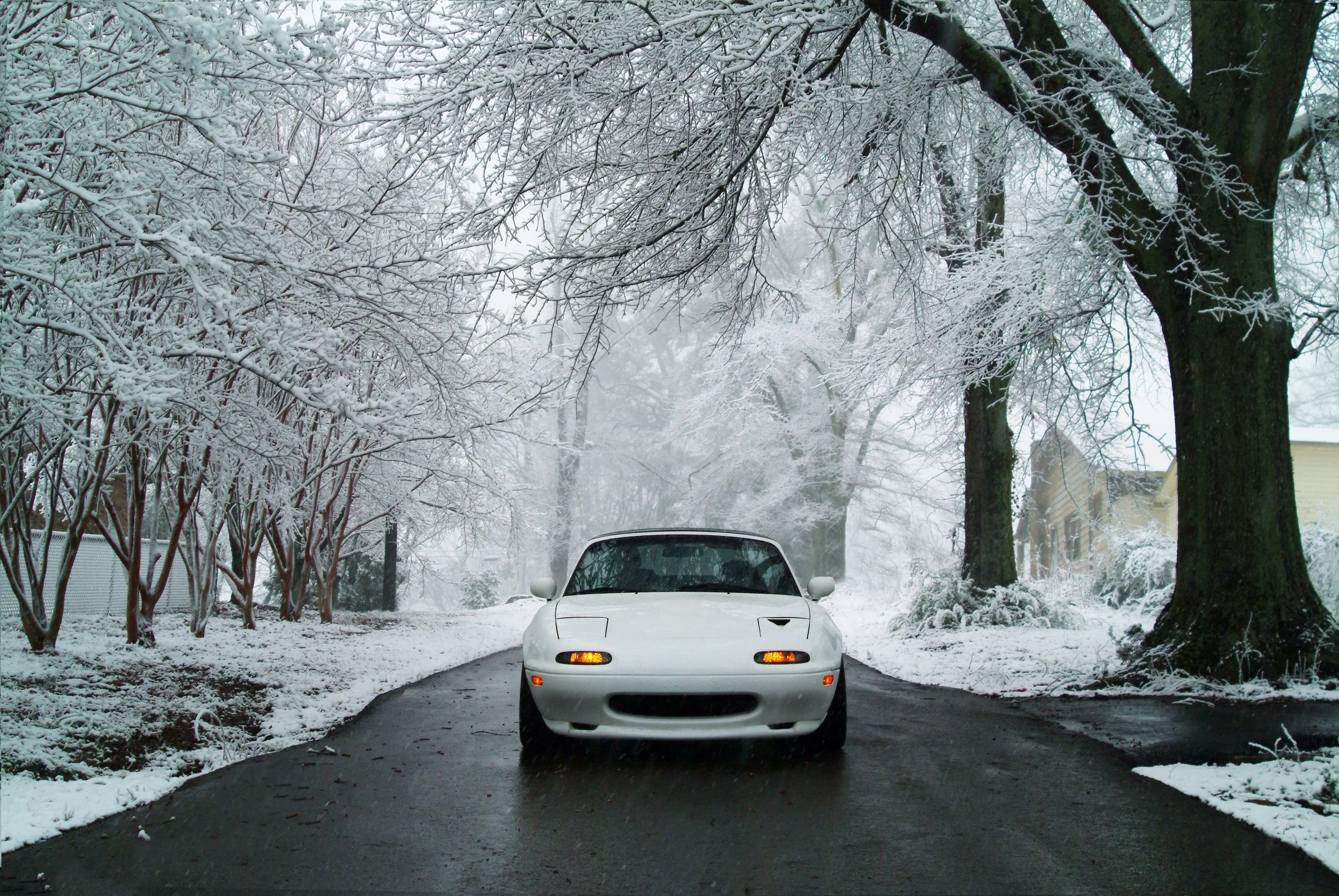
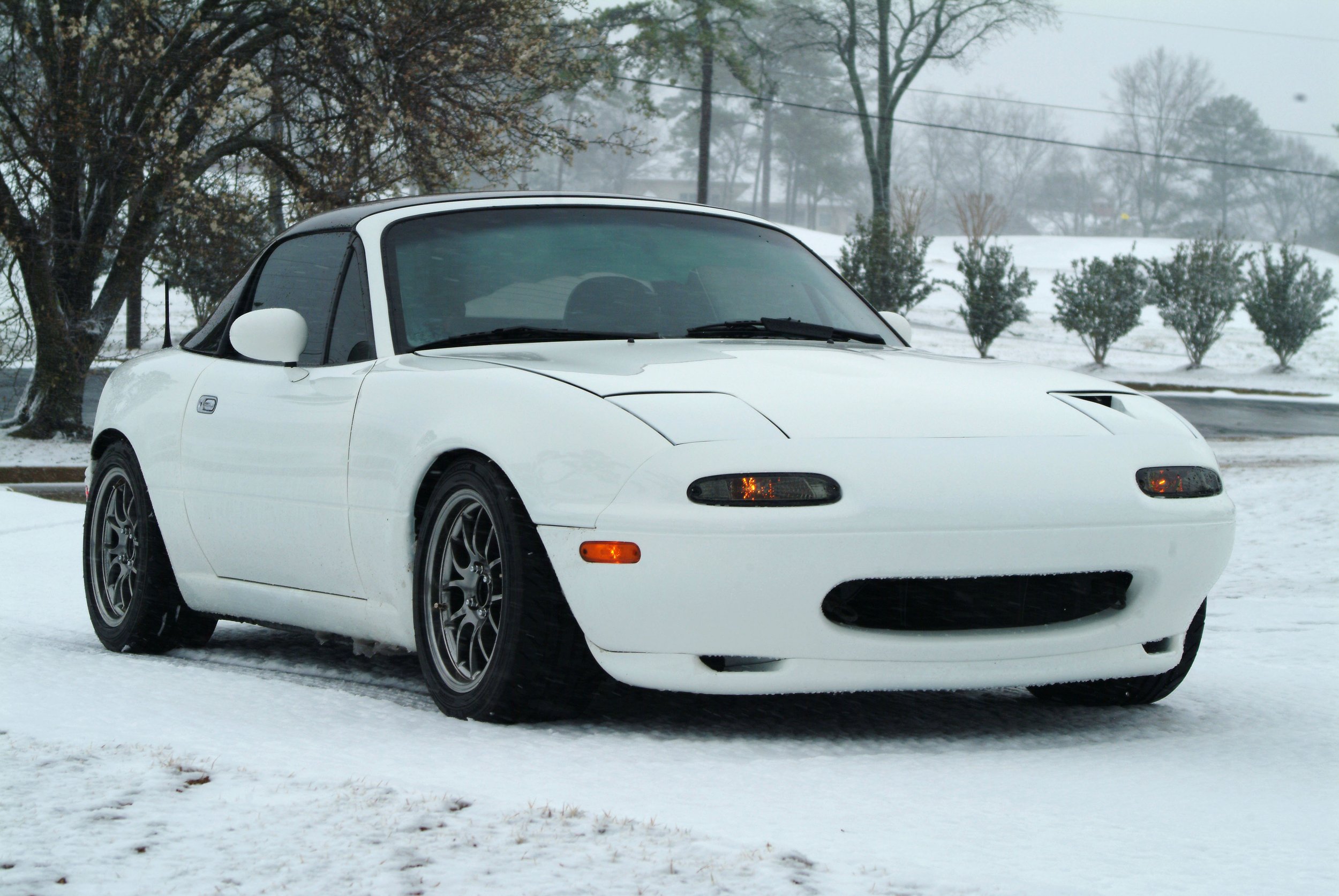
When you approach the car, the most striking feature is not any of the mechanical miracles within, but the absolute cleanliness of the car. It strikes one as a new car, though it is now 17 years old. It was recently repainted and debadged, but it also sports a set of smoked turn signal lenses on the front, which make the paint work all the more striking. The stance is better than original, as the car is lowered, riding on a Spec-Miata suspension and 6UL 15x8" wheels. The car does not scream "LOOK AT ME!" as some modified cars do, but it rewards a second look with a rich texture that attention to detail always delivers.
Stan drove the car for a few minutes to demonstrate its performance and explain some of the choices he'd made regarding his minimal and minimalized changes in the cockpit. After getting a sense of the car from the passenger seat, we traded sides and I got the best seat in the house. Being on my best behavior at first, I was able to relish what a powerful Miata feels like. There was instant acceleration, brought on in a linear fashion that made it obvious that this would be perfect as a daily driver. It did not act like a wild beast; more like a pussycat when driven normally. But Stan didn't put all these go-fast goodies on the car just to drive it normally. When the car is pushed, it pushes you back into the seat and runs like a pussycat that has had the proverbial scalding. Of course that is on the "Low Power" setting. Throw the switch to the "High Power" and the external wastegate unleashes a much larger member of the feline family. It is amazing how strongly this car pulls out with all 300 hp.
Even with all of those ponies hitting the ground at once, the rear-end stays planted and the car lunges at the road ahead, devouring the tarmac. Too soon, the legal limit was reached, even surpassed, requiring me to lift off the throttle. Driving this in rush hour traffic would be maddening. Unless there is a clear road, the low power setting is the only one that won't lead to massive frustration. Before I endangered my license, I turned the car back over to Stan. As the saying goes, "If you can't go fast with 90hp, 900 won't help you." That is true, but 300 will make you rethink your tire budget.
This is more than enough car for most mortals, but if the friendly arms race between Walker and Stan continues, I have no doubt that this car will undergo more revisions that will significantly improve its power. Undoubtedly these will be designed and implemented with the same high level of skill and thoughtfulness that Stan has used on his current modifications. And the world will be a richer, more interesting place for his efforts.
Here we end with a reminder of Fact number one: This should have been my car. The corollary is Truth number one: Everyone, including me, is glad that it wasn't.